Garage Doc NJ Blog · Updated September 2026
Winterize Your Garage Door: 7 Cold-Weather Fixes Before NJ's First Freeze
Short answer: do it in October. Replace worn weatherstripping, lubricate with silicone before the cold, check insulation on attached garages, test the battery backup, and get the springs and balance checked, because January is when neglected doors snap springs and trap cars inside.
1. Replace worn weatherstripping and bottom seals
The seal along the bottom of the door and the weatherstripping around the frame are your garage's first defense against cold, water, and mice. Rubber and vinyl harden and crack with age; a flattened bottom seal leaves a gap along the whole width of the door.
- The daylight test: close the door on a bright day and look from inside. Any daylight around the edges is a gap cold air pours through.
- Check the bottom seal for brittleness, tears, and chew marks, mice love a soft rubber seal as a winter doorway.
- Replace, don't patch. Bottom seals slide into a retainer channel and swap out in minutes; perimeter weatherstripping nails or screws to the frame. If yours is more than five years old, assume it is done.
2. Lubricate for cold, not for summer
Fall lubrication is the single most important maintenance act of the year, because the wrong lubricant, or a dry door, turns sluggish and loud when temperatures drop. Standard grease thickens in the cold and makes the opener work harder; a dry chain grinds.
- Use silicone-based or white lithium garage door lubricant on hinges, rollers, springs, and the opener's chain or rail. Silicone stays fluid in freezing temperatures.
- Skip WD-40 as a long-term lubricant, it evaporates in days and attracts grit that wears parts faster.
- Do it in October, before the first freeze, so the lubricant is in place when the cold arrives. This is also on our seasonal maintenance checklist for good reason.
Book a Fall Tune-Up Before the Rush
Lubrication, balance testing, seal inspection, and sensor checks, done by a pro, before January prices and January wait times.
(973) 653-8456Tap to call now3. Check the insulation (R-value matters for attached garages)
If your garage is attached, the garage door is effectively an exterior wall of your house, and an uninsulated steel door is a giant cold radiator pressed against your living space.
- Know your R-value. Uninsulated single-layer steel doors are around R-0 to R-4. Insulated doors run R-8 to R-16+. Higher is better for attached garages.
- What insulation buys you: a garage that stays 10 to 20 degrees warmer, less heat bleeding through shared walls, lower heating bills, and a noticeably quieter door.
- Retrofit vs replace. Insulation kits exist for some doors, but they add weight the springs were not sized for. If your door is old AND uninsulated, replacement with a factory-insulated door is usually the smarter move, here is what insulated doors cost and save in NJ.
4. Test the opener's battery backup
NJ winters bring ice storms and outages. If the power is out and your opener has no battery backup, the door is a very heavy manual lift, fine in theory, miserable at 6am in a blackout.
- Test it now: unplug the opener and run the door. A healthy backup handles several open/close cycles.
- Replace old batteries. Backup batteries last a few years; if yours is original to a 2018 opener, it is living on borrowed time.
- Know the manual release. No backup? Find the red emergency release cord now, not during an outage. Pull it to disconnect the opener, then lift the door by hand.
5. Get the springs and balance checked
This is the big one. Cold makes steel brittle, and January is peak season for snapped torsion springs in New Jersey. A spring near the end of its cycle life can survive October and fail on the first 15-degree morning, leaving your car trapped inside.
- The balance test: pull the red release cord, lift the door to halfway by hand, and let go. A balanced door stays put. If it drops or shoots up, the springs need professional attention. Compare what you see to the warning signs of a failing spring.
- Look for rust and gaps. Rust on the coil, a visible gap in the torsion spring, or frayed lift cables are all fail-soon signals.
- Never DIY springs. Torsion springs store enough energy to cause serious injury. Inspection is DIY; adjustment and replacement are pro-only.
6. Test the safety systems
Cold, damp, and dark arrive together, and your door's safety systems are what stand between a closing door and a kid, a pet, or a car bumper.
- Auto-reverse test: lay a 2x4 flat under the door and close it. The door should reverse on contact.
- Sensor test: wave a broomstick through the photo-eye beam while the door closes. It should reverse immediately.
- Clean the lenses and confirm both indicator lights are solid. Snow piled against the door later in winter can block the beams, so keep the habit of sweeping the threshold.
Don't Get Stuck in January
A fall tune-up catches the weak springs, worn seals, and dead backup batteries that become emergency calls in the cold. One visit, fixed price.
(973) 653-8456Tap to call now7. Stop the door from freezing to the driveway
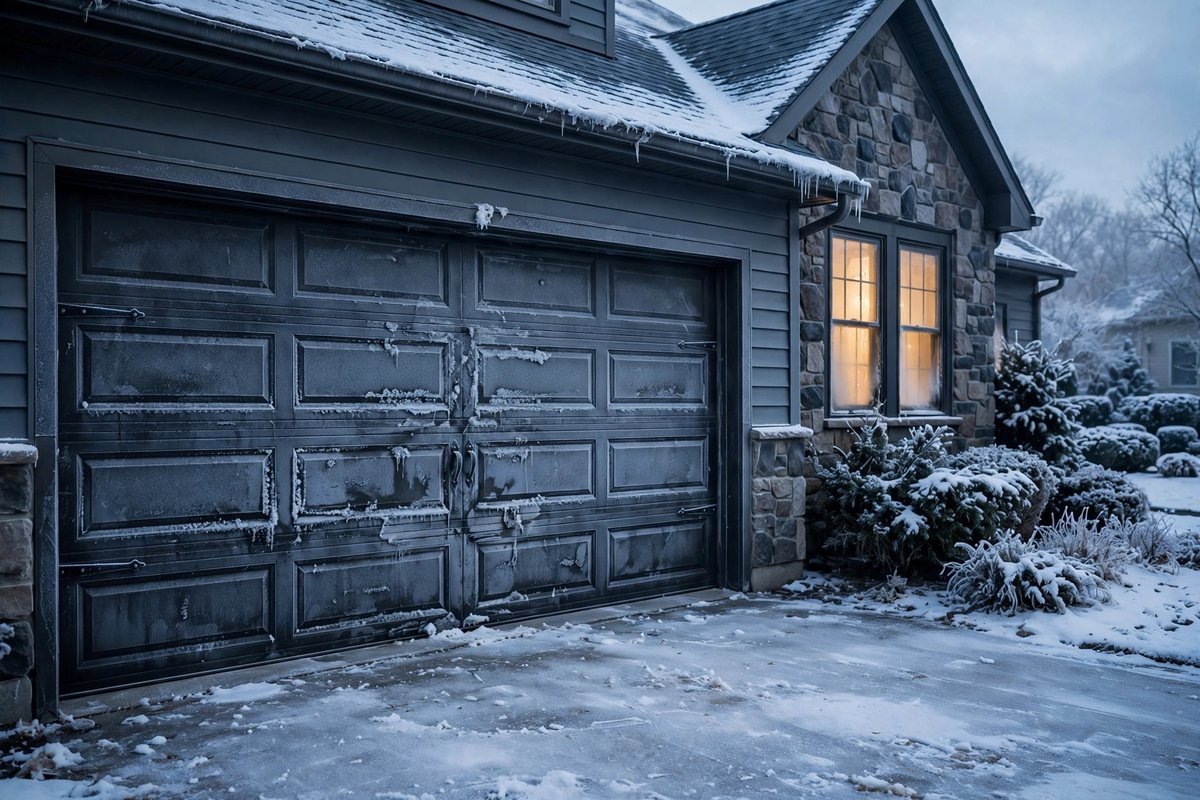
Meltwater pools under the door, freezes overnight, and glues the door to the driveway. The opener does not know the door is frozen. It just pulls until something gives, and that something is usually a gear or a weakened spring.
- Grade water away from the door so meltwater drains instead of pooling at the threshold.
- Keep the bottom seal fresh (see fix #1), a good seal keeps meltwater out in the first place.
- If it freezes, chip it free by hand. Never run the opener against a frozen-shut door. A few minutes with an ice chipper beats a stripped gear.
- Rinse road salt off the lower panels and hardware through winter, salt kicked up by tires corrodes the door bottom, cables, and brackets.
Why October, not December
NJ's first freeze usually lands in late October or November. Repair shops book up fast once the cold hits, and emergency spring replacements in January cost more than fall tune-ups, in money and in mornings spent with a car trapped in the garage. The homeowners in Paterson, Clifton, Wayne, and Montclair who call in October get same-week appointments and winter-proof doors. The ones who wait call us in January from a cold garage.
Garage Doc NJ runs fall tune-ups across North Jersey, Passaic, Hackensack, Newark, Elizabeth, Garfield, and Union City included. Typical repair pricing is here if you are weighing a tune-up against a bigger fix.
Winterizing FAQs
Why do garage door springs break more in winter?
Cold makes steel more brittle, and a torsion spring already near the end of its cycle life can snap on the first hard freeze. January is peak breakage season in New Jersey. A fall balance test and inspection catch weakened springs before they fail on a 15-degree morning.
Should I insulate my garage door for winter in NJ?
For attached garages, yes, the garage shares walls with your living space, and an uninsulated steel door is a giant cold radiator. An insulated door (R-8 to R-16) keeps the garage 10-20 degrees warmer, cuts heat loss through shared walls, and runs quieter. For detached unheated garages, insulation matters less.
What kind of lubricant should I use on a garage door in winter?
A silicone-based or white lithium garage door lubricant, applied in fall before the cold arrives. Standard grease thickens in freezing temperatures and makes the door sluggish; silicone stays fluid. Never use WD-40 as a long-term lubricant, it evaporates and attracts grit.
How do I keep my garage door from freezing to the ground?
Water pools under the door and freezes it to the driveway. Keep the area graded so water drains away, and replace a worn bottom seal so meltwater stays out. If the door is frozen shut, chip the ice free by hand, never run the opener against it, or you will strip gears or snap a weakened spring.
When should I winterize my garage door in New Jersey?
October. NJ's first freeze typically lands in late October or November, and repair shops book up fast once the cold hits. A fall tune-up costs far less than a January emergency spring replacement, and you will not be stuck with a car trapped inside on a workday morning.
Do I need a battery backup on my garage door opener?
If winter storms knock out your power, a battery backup lets the opener run the door several cycles until power returns. Test an existing backup by unplugging the opener and running the door. No backup? Know where your red emergency release cord is so you can open the door manually during an outage.